

Meadow Borders for Cottage Garden Style
Why a Meadow Border Belongs in a Cottage Garden
The cottage garden has always been a little unruly at the edges. That soft, spilling quality — flowers leaning over a path, bees working the blooms, seedheads left standing into winter — is exactly what a meadow border does best. Rather than a rigid herbaceous bed, think of it as a loose ribbon of native wildflowers and grasses, pinned into place by clipped evergreens and a gravel path.
For British gardeners this approach has real practical advantages. Native perennials and grasses are adapted to our rain, our cool summers and our heavy clay or thin chalk soils. Once established they need no feeding, no staking and very little watering. They also earn their keep ecologically: ox-eye daisy, field scabious and knapweed feed pollinators from May to September, while the standing stems and seedheads carry birds and invertebrates through the leaner months. Best of all, a meadow border is forgiving. If a plant wanders, that is part of the charm.
Choosing Plants That Suit Your Ground
Start with the soil in front of you rather than the picture in your head. On heavy clay, cowslip, meadow buttercup, ragged robin and greater knapweed settle in well. On chalk or limestone, look to salad burnet, wild marjoram, small scabious and quaking grass. Light sandy soils suit sheep's fescue, harebell and bird's-foot trefoil.
Grasses matter as much as the flowers, but you want the modest ones. Crested dogstail, sheep's fescue and sweet vernal grass give that soft, wind-blown texture without swamping everything. Avoid agricultural ryegrass entirely — it is too hungry and too aggressive for a border.
- Yellow rattle is your secret weapon. Sow it in autumn and it weakens grasses by drawing nutrients from their roots, opening space for flowers.
- Cornfield annuals — cornflower, poppy, corn marigold — give a quick first-year display while perennials bulk up.
- Spring bulbs such as snakeshead fritillary, camassia and crocus extend the season before the meadow wakes properly.
The Clipped Evergreen Framework
Without structure, a meadow border can read as untidy rather than relaxed. This is where clipped evergreens earn their place. Plant low domes or tight cones at roughly 60–80cm intervals along the length of the border, either singly or in loose groups, and let the flowers weave between them.
Box is traditional, but with box blight and box tree moth now widespread, many gardeners are turning to yew, Ilex crenata, lavender, rosemary, cotton lavender or wall germander. Yew gives the crispest finish and will tolerate hard clipping; lavender and rosemary bring scent and nectar, though they need sharp drainage and a light trim in late August rather than a hard cut.
Clip your evergreens twice a year — late May to early June, then again in late August while growth is still soft. This keeps them dense and dark against the airy meadow planting, and gives the border a legible shape in February when everything else has vanished.
Gravel Paths and Edges
A gravel path is what makes a meadow border feel intentional. It gives you access for clipping, weeding and cutting, and it draws the eye along the planting. Use a self-binding gravel or hoggin laid about 75mm deep over a compacted sub-base, and edge it with reclaimed brick, granite setts or a simple timber board.
Keep the path edge crisp where it meets the planting. A clean, slightly irregular line — never a ruler-straight one — reads as cottage garden rather than municipal. Gaps between gravel and plants are also excellent basking spots for solitary bees and ground beetles, so do not grout or seal them.
Planting in Drifts, Not Rows
The single biggest mistake is dotting individual plants about. Wildflowers look best in drifts — irregular patches of one species, repeated down the border. Aim for groups of five, seven or nine plants of the same kind, spaced so their foliage just touches at maturity.
If you are sowing a seed mix, use roughly 80 per cent grass to 20 per cent flowers by weight, and sow in September or early October when the soil is warm and rain is reliable. Rake it in lightly — do not bury it. Alternatively, and more controllably, buy plug plants and set them out in staggered drifts, then mulch between them with fine gravel or a thin layer of leafmould.
Never enrich the ground. No compost, no manure, no fertiliser. Rich soil grows floppy grass and few flowers; lean soil is what you want.
Year-Round Care in Brief
- Late July to August: cut the whole meadow to 5–10cm with a strimmer or scythe, then rake off the hay. Removing the cuttings is what keeps fertility low.
- September: sow yellow rattle into scarified patches, and top-dress the gravel path.
- October: second cut if growth has been strong, and plant bulbs and plug perennials.
- February to March: last cut before growth starts, tidy evergreen domes, refresh gravel edges.
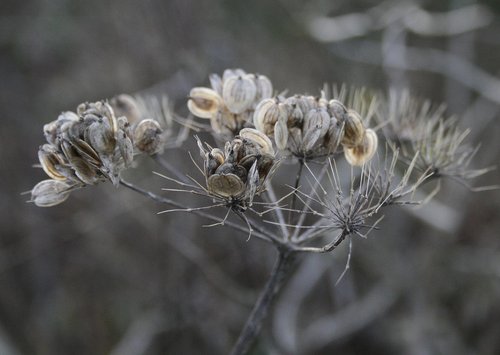
Leave a few seedheads standing over winter and you will be rewarded with goldfinches on the teasels and knapweed. That is the quiet pleasure of a meadow border: less work, more life, and a garden edge that looks as though it grew there by itself.
tag: Garden Design

James Hargreaves Author
Observe which species bloom first, when grasses set seed, and how rainfall shapes growth to guide your yearly management.
YOU MAY ALSO LIKE
Reading the Seasons in a Wildflower Meadow
Jul 22
10Use deep pots with gritty compost, choose compact native species, and water carefully during dry spells to sustain a tiny meadow.
read more
Making a Mini Meadow in Containers
Jul 18
10Learning leaf shapes and arrangements helps identify ox-eye daisy, knapweed, and birds-foot trefoil before flowers appear in spring.
read moreWildflower Meadows
-

ERRIC CATONA
Young meadows need gentle moisture until roots establish, but avoid overwatering and never let seedlings dry out completely.
May 19, 2016 at 5.12 pm
Reply
ERRIC CATONA
Plant evening-scented native flowers and leave some long grass uncut to provide shelter and nectar after dark for moths.
May 19, 2016 at 5.12 pm
Reply -
ERRIC CATONA
A simple mulched path defines walking routes, protects delicate plants, and lets you enjoy the meadow without trampling it.
May 19, 2016 at 5.12 pm
Reply
Garden Design
Your email address will not be published.